The Evolution of Poker Strategy
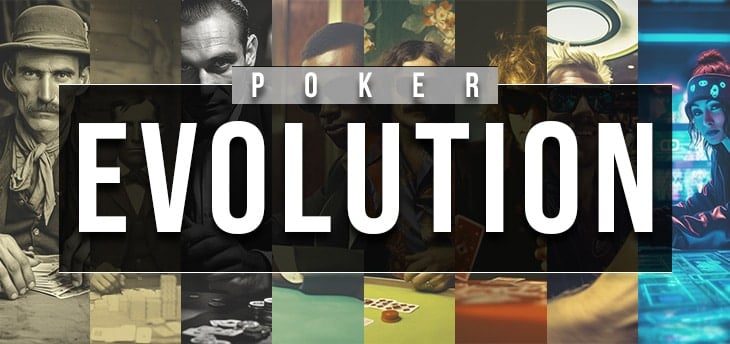
Poker’s strategic playbook has changed almost beyond recognition since its earliest days. From its humble beginnings as a bluffing game played in smoky saloons, poker has grown into a game shaped as much by math and game theory as by reading an opponent’s face. Here’s how that shift actually happened, era by era.
Late 19th – Early 20th Century
A few decades back, poker was played in smoky saloons, with cowboys in wide-brimmed hats and a worn deck of cards. Back then, poker was all about the bluff. The strategy was simple in theory: make your opponent think you have a better hand than you actually did.
Well, yes and no. The basic premise was straightforward, but mastering the art of deception was no small feat: reading your opponent, understanding their tells, and making your move at the right moment, on top of keeping a straight face. There were the occasional under-the-table dealings too, part of the era’s rougher edges.
Early to Mid 20th Century
As the game matured, players realized that recklessness was the fast track to an empty wallet. Enter the era of tight-aggressive play. Fewer hands, more aggression, and a whole lot of pots won with sheer strategic brilliance.

The Introduction of Math
By the 20th century, the game was changing again. A new generation of players brought math into poker: calculating odds, understanding probabilities, and making decisions based on cold, hard numbers instead of gut feel alone.
Calculating the odds of hitting an open-ended straight draw while also reading an opponent’s face is no small task. This new approach added a layer of complexity to the game. Players began to realize that while intuition and reading people were important, understanding the math behind the game could give them a significant edge.
The Rise of the Poker Theorists
As poker continued to evolve, a new breed of player emerged: the poker theorist. These were players who didn’t just play the game; they studied it, dissected it, and wrote about it. Books began to appear, offering insights into strategy, game theory, and the psychology of poker.
Doyle Brunson’s “Super/System” – One of the first books to go deep into the strategies of various poker games.
David Sklansky’s “The Theory of Poker” – A close look at the mathematical and theoretical aspects of the game.
These books and many others transformed poker from being viewed as a game of chance to a game of skill. Players now had a wealth of knowledge at their fingertips, and the game became more competitive than ever.
Sklansky’s Brainchild
David Sklansky dropped a bombshell with the concept of the “Gap”. Suddenly, players were rethinking their calls and raises. It was a time of introspection, strategy refinement, and many “Aha!” moments.
The Semi-Bluff
The 80s introduced the semi-bluff, a strategy where players could bet on potential rather than just the present, betting as though the hand might improve rather than waiting to see if it did.
The C-Bet Revolution
The continuation bet, or c-bet, stormed onto the scene and changed the post-flop game forever, turning post-flop play into a narrative players could tell with their bets, not just their cards.
The Digital Age
With the advent of the internet, poker went digital. And with online poker came a slew of new tools and software designed to help players analyze their game, track their stats, and improve their strategy. The math-focused players from earlier eras were back with a vengeance, creating algorithms and software to crunch the numbers and give players an edge.
But it wasn’t all about the numbers. Online poker also introduced a new dynamic to the game: the absence of physical tells. Without being able to see an opponent, reads had to come from betting patterns and timing instead of body language. This added a new layer of complexity to the game, forcing players to adapt and evolve their strategies once again.
Multi-Tabling
With the dawn of online poker, players weren’t confined to just one table. The more, the merrier became the motto, as multi-tabling took the online poker world by storm. More tables, more hands, more wins!
Playing the Field
Daniel Negreanu popularized the art of playing a wider range of hands with smaller bets. It was all about controlling the pot and keeping opponents guessing. A masterful dance of strategy and intuition!
3 and 4-Betting Light
The poker tables turned aggressive, and players had to adapt. The response? 3-betting and 4-betting light. A bold strategy to tackle aggression head-on and reclaim control of the game.
Floating
Floating became the go-to strategy to counter frequent c-bettors. It was a game of patience, waiting for the perfect moment to seize the pot. A delicate balance of risk and reward!

Blending Old and New
Modern poker today is a blend of the old and the new. While the mathematical and analytical aspects of the game are more important than ever, the human element remains crucial. Reading your opponent, understanding their strategy, and adapting on the fly are skills that will never go out of style.
The rise of celebrity poker players added another layer. With televised tournaments and high-stakes games, poker has become a spectator sport. Players like Phil Ivey, Daniel Negreanu, and Vanessa Selbst have become household names, known not just for their skill at the table but for their larger-than-life personalities.
Their success comes down to a blend of old-school intuition and modern analytical prowess. It’s not enough to be good at math or to have a killer poker face. In today’s game, you need both.
GTO
Game Theory Optimal (GTO) play emerged as the gold standard. Players now aimed for unexploitable strategies, blending old-school intuition with cutting-edge game theory. The quest for poker perfection had truly begun.
Solver-Based Play
With technology at their fingertips, players turned to solvers to refine their strategies. Algorithms, analytics, and a dash of human intuition created a potent mix that redefined modern poker.
The Continuous Evolution of Poker
From the smoky saloons of the Wild West to the high-tech online tables of today, poker has come a long way. Its evolution reflects the game’s enduring appeal and its ability to adapt and change with the times, and today it’s easier than ever to play poker with friends online.
From bluffing with a pair of twos to running a solver-approved GTO line, the throughline hasn’t changed: poker rewards players who can read the moment and back it up with the math.
👉 Use Referral Code: WINBIG 👈PLAY NOW!
Step into a professional-grade poker environment with GGPoker, home to daily cash games, multi-table poker tournaments, and legendary WSOP events. Whether you’re after the prestige of a WSOP bracelet, the grind of winning a WSOP Circuit ring, or just building your skills with free poker games, GGPoker has you covered. Built-in tools like Smart HUD and PokerCraft offer players deep insight into gameplay, while staking features help bankroll growth. The GGPoker School provides essential resources for learning strategies and exploring a variety of poker formats.
About the Author: Shawn Altbaum has been writing and editing in the online gaming industry since 2007, reporting live from the WSOP Main Event and conducting interviews with professional players. An active poker player, he combines industry expertise with firsthand knowledge of the games he covers. He currently serves as Global Head of Copywriting at NSUS Group, overseeing brand voice and content strategy across GGPoker and GGVegas.